

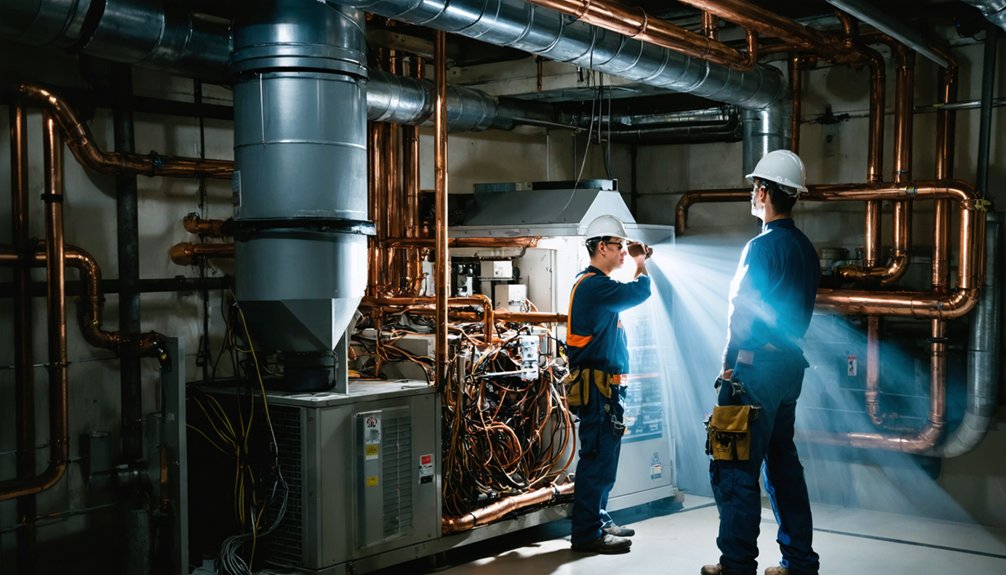

Heating, ventilation, and air conditioning (HVAC) systems are essential for maintaining comfort in homes, but they are prone to issues that can disrupt their efficiency. Common problems include thermostat malfunctions, dirty filters, refrigerant leaks, electrical faults, and drainage complications. Tackling these issues promptly can prevent costly repairs and ensure year-round comfort. Discover simple solutions to these widespread HVAC troubles and learn how to maintain optimal system performance and energy efficiency.
Thermostat Malfunctions
Although often overlooked, a malfunctioning thermostat can significantly disrupt the functionality of an HVAC system. It acts as the command center, regulating temperature and ensuring comfort within a communal space.
When it fails, the entire system can become erratic, leading to discomfort and a sense of disconnection among occupants. Common issues include incorrect temperature readings or unresponsive controls, which can result in the HVAC system not heating or cooling as desired.
This can leave a group of individuals feeling out of sync with their environment, impacting their collective experience. Regularly checking and calibrating the thermostat is essential to maintain harmony in shared spaces.
Dirty or Clogged Filters
Thermostat issues are not the only culprits that can hinder the efficiency of an HVAC system; dirty or clogged filters also play a significant role. When filters are not regularly cleaned or replaced, airflow is restricted, causing the system to work harder. This not only leads to increased energy bills but can also shorten the lifespan of the HVAC unit.
Clean filters ensure optimal airflow, maintaining a comfortable environment for everyone. Additionally, dirty filters can negatively impact indoor air quality, which is essential for community well-being.
Regular maintenance, such as monthly inspections and replacements when necessary, fosters a healthier living space. By addressing filter problems, individuals can ensure their HVAC systems function efficiently, promoting a sense of belonging through shared comfort and care.
Refrigerant Leaks
Refrigerant leaks, a common yet critical issue in HVAC systems, can significantly compromise the unit's efficiency and performance.
These leaks often result in inadequate cooling or heating, leading to discomfort in shared living or working spaces. Identifying the presence of a leak requires attention to signs such as hissing sounds, icy buildup on components, or diminished airflow.
While the issue may seem daunting, resolving it brings the HVAC system back to its optimal state, fostering a comfortable environment for everyone.
A certified technician should be contacted to handle refrigerant issues, ensuring proper repair and recharging of the system. This professional approach not only protects the system's longevity but also maintains a safe, welcoming atmosphere for all occupants.
Electrical Issues
When electrical issues arise within an HVAC system, they can lead to a myriad of complications, including system failures and inconsistent operation. Such problems may stem from faulty wiring, blown fuses, or tripped breakers.
These electrical anomalies disrupt the flow of power necessary for seamless functioning. For communities relying on the consistent comfort of HVAC systems, addressing these issues is paramount.
Regular inspections by certified technicians can prevent potential hazards, offering peace of mind and maintaining trust within the community. Ensuring all connections are secure and components are in good condition fosters reliability.
Replacing worn wires and fuses as needed can avert unexpected breakdowns. When everyone feels secure in the knowledge that their environment remains comfortable, a sense of belonging flourishes.
Drainage Problems
Clogged condensate drains are a common issue within HVAC systems, leading to water leaks and potential damage. This problem not only disrupts home comfort but can also make homeowners feel disconnected from their spaces.
Understanding the causes and solutions fosters a sense of belonging and control. Debris, mold, and algae often block the drainage line, causing water to back up. Regular cleaning and inspection can prevent these blockages.
Using a wet/dry vacuum to clear obstructions or pouring a vinegar solution through the line can effectively maintain flow. Installing a safety switch that shuts off the system when a clog is detected adds an extra layer of protection.
In Conclusion
In addressing common HVAC issues, proactive maintenance is key. Regularly checking and calibrating thermostats ensures accurate readings, while cleaning or replacing filters monthly promotes optimal airflow. Professional intervention is vital for refrigerant leaks to maintain efficiency, while routine electrical inspections can prevent unexpected failures. Consistent maintenance of condensate drains helps avoid water damage. By adopting these practices, homeowners can significantly enhance their HVAC system's performance, ensuring comfort and reliability throughout the year.