

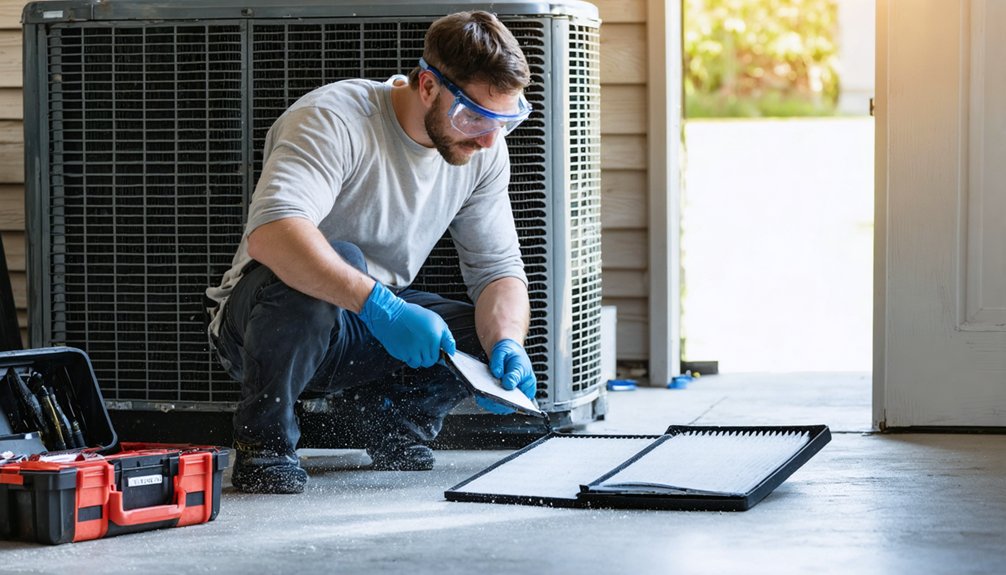

Regular DIY maintenance is crucial for ensuring the efficiency and longevity of HVAC systems. By focusing on vital tasks such as checking air filters, cleaning condenser coils, and maintaining thermostats, homeowners can significantly improve system performance. Clearing outdoor debris and lubricating moving parts further contribute to a healthier indoor environment. These straightforward practices not only enhance energy efficiency but also prevent costly repairs. Curious about how these simple steps can make a substantial difference?
Checking and Replacing Air Filters
Regularly inspecting and replacing air filters is crucial for maintaining an efficient HVAC system. Air filters play a vital role in ensuring clean air circulates throughout homes, creating a sense of comfort and well-being.
When filters become clogged, the system struggles to function, reducing efficiency and increasing energy costs. For those in a community that values sustainability and connection, regularly changing air filters can extend the lifespan of their HVAC systems while reducing environmental impact.
Homeowners can check filters monthly, replacing them every three months or sooner if needed. Clean filters not only enhance air quality but also foster a healthier indoor environment, promoting a shared commitment to community health.
In this way, simple maintenance becomes a collective effort towards comfort and sustainability.
Inspecting and Cleaning Condenser Coils
Beyond maintaining clean air filters, attention to condenser coils is also important for an efficient HVAC system.
Condenser coils, typically located outside the home, play a vital role in expelling heat from the system. Over time, dirt, debris, and grime can accumulate on these coils, reducing their effectiveness and causing the system to work harder than necessary. Regular inspection and cleaning can help ensure optimal performance and energy efficiency, which members of a mindful community appreciate.
To clean the coils, one should first turn off the power to the unit. Using a garden hose or a soft brush, gently remove the dirt and debris. Avoid using high-pressure water, which might damage the coils.
This simple task contributes to the system's longevity and reliability.
Ensuring Proper Thermostat Functionality
A functional thermostat is crucial for maintaining comfort and energy efficiency in any home. It acts as a central control point for the HVAC system, ensuring that temperatures remain consistent and utilities are used efficiently.
Regular monitoring of the thermostat's settings and functionality can prevent unexpected fluctuations in temperature. Verifying that the thermostat is set to the correct mode, whether heating or cooling, is essential. Additionally, replacing batteries periodically ensures uninterrupted performance.
It's also beneficial to dust around the thermostat to prevent any interference with its sensors. For those with programmable thermostats, reviewing and updating settings seasonally helps accommodate any lifestyle changes.
Clearing Debris From Outdoor Units
Outdoor HVAC units play a vital role in maintaining a home's climate control, but their performance can be significantly hindered by debris accumulation.
Leaves, dirt, and other outdoor particles can block airflow, forcing the system to work harder and reducing efficiency.
Regularly clearing debris not only enhances system performance but also fosters a sense of pride and responsibility among homeowners.
Lubricating Moving Parts
Proper lubrication of moving parts is essential in maintaining the efficiency and longevity of an HVAC system. Ensuring that components such as fan motors and bearings are well-lubricated minimizes friction and wear, preventing costly breakdowns.
Regularly checking these parts for lubrication needs is a task that every homeowner can undertake to feel more connected to the maintenance of their home. Using the manufacturer-recommended lubricant, apply it carefully to the necessary areas, focusing on components that experience the most movement.
This simple yet crucial step can foster a sense of responsibility and belonging in one's home care routine. By doing so, individuals not only contribute to their HVAC system's optimal performance but also extend its lifespan, reinforcing the community's value of sustainability.
In Conclusion
Regular DIY maintenance of your HVAC system is crucial for its efficient operation and longevity. By routinely checking and replacing air filters, inspecting and cleaning condenser coils, ensuring proper thermostat functionality, clearing debris from outdoor units, and lubricating moving parts, homeowners can significantly enhance system performance. These simple yet effective tasks not only ensure energy efficiency but also contribute to a healthier indoor environment, ultimately saving on costly repairs and extending the life of the HVAC system.